Torch Lighter with a Blower: How It Works for Charcoal and Campfires
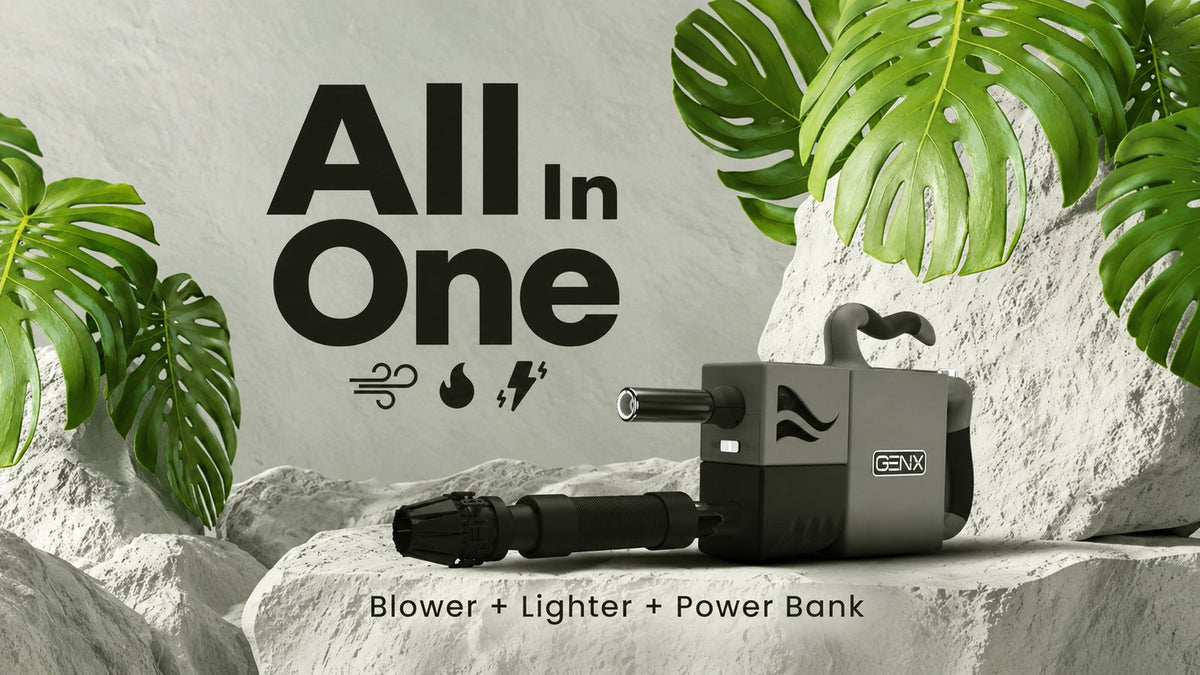
Getting a fire going takes two things at two different moments. First you need concentrated heat in one spot so the tinder or the first coals catch. Then you need a steady supply of air so that small glow spreads instead of dying out. A torch lighter with a blower puts both in one hand. Here is how the combination works, where it helps, where it doesn't, and how to use one without scattering sparks around your campsite.
What this kind of tool is
A torch lighter burns butane as a focused, pressurized jet instead of the soft, floating flame of a disposable lighter. A blower is a small electric fan that pushes a stream of air through a nozzle. Tools in this category pair the two. Some are a torch with a small fan built into the handle; others are a battery-powered blower with a torch module alongside it. The idea is the same: light with the flame, then feed with air, without switching tools or kneeling down to blow on the coals.
Why airflow speeds up ignition
Fire needs three things: fuel, heat and oxygen. Charcoal or firewood supplies the fuel, and the torch supplies the starting heat. Oxygen is usually the bottleneck. A freshly lit coal sits in a layer of its own smoke and spent gases, so it smolders instead of burning hard. A gentle, steady stream of air clears that layer away and brings in fresh oxygen, so the coal burns hotter and passes its heat to its neighbors.
That is the same job a chimney starter does with its tall shape, and the same job you do when you blow on a fire. A blower simply does it from a safe distance, without the light-headed feeling, for as long as the fire needs it.
Using one on charcoal
- Build a small pile or fill a chimney starter, with a little crumpled paper or a starter cube underneath if you have one.
- Unlock the torch and hold the flame on the starter, or on two or three coals at the bottom of the pile, until they glow red at the edges.
- Lock the torch and set it down away from the grill.
- Stand upwind, hold the blower well back and aim low, at the base of the pile or the bottom holes of the chimney.
- Keep the air gentle and steady. Move closer only if the glow stalls.
- Stop when the coals show gray ash with orange in the gaps, then spread them for cooking.
For the full charcoal routine, including how to tell when the coals are ready, see how to light a charcoal grill without lighter fluid.
Using one on a campfire
A campfire starts the same way, only bigger. In an existing fire ring, build a fist-sized bundle of dry tinder, lay pencil-thin kindling over it, and keep larger sticks ready to the side. Light the tinder at its base from the upwind side. Once the kindling has caught on its own, give low air at the base so the flames climb into the larger wood. Add fuel a piece at a time rather than smothering the fire with a big log.
The blower earns its keep again the next morning. Rake last night's coals together, lay a few small sticks across them, and a little air often brings them back to flame without new tinder. Wet or windy weather calls for more preparation; our field guide to starting a fire in wet or windy weather covers it step by step.
Honest pros and cons
What works well
- No lighter fluid. No chemical smell on the food and no flare-up from a squirt of fluid on a hot coal.
- Precise heat. The jet goes where you aim it, at the tinder or the bottom coals, and away from your fingers.
- Air on demand. Useful for feeding a slow chimney, waking up morning coals or helping damp kindling catch.
- Refillable. One lighter topped up from standard butane cartridges, instead of a drawer of dead disposables.
The trade-offs
- Two things to keep supplied. The torch needs butane and the blower needs a charged battery.
- Butane dislikes cold. Near freezing it vaporizes poorly, so keep the tool in an inside pocket or in the tent on cold mornings.
- Too much air backfires. A hard blast cools small flames, scatters ash and sparks, and can push a burning coal out of the grill.
- More to carry than matches. It suits car camping and cookouts better than ultralight backpacking.
- It is an adult tool. Torch lighters need the same care as any open flame, and they are not travel gear for flights.
Whatever you use, keep a backup way to light a fire in the kit. Redundancy is simply good fire practice.
Safety checklist
- Check local fire restrictions and burn bans before you light anything, and use existing fire rings and grills.
- Keep the torch locked whenever it is stowed or set down, and keep it away from children.
- Never point the flame at people, pets, the tool's case or anything you don't mean to light.
- Refill outdoors, away from flames, and let the fuel settle before lighting.
- Use low, steady air from a distance, and keep faces, food and gear out of the airstream.
- Have water and a shovel ready. Before you leave, drown the fire, stir it and feel for heat until it is cold.
- Don't leave butane or batteries in a hot car.
Where GENX fits
The GENX All-in-1 CampCare Tool is one take on this category. It pairs a refillable butane torch lighter, with a lock/unlock switch, and a 40 CFM air blower driven by a 110,000 RPM brushless motor, both in one unit with a 96 Wh (24 V, 4,000 mAh) battery. The same unit also vacuums, inflates and deflates gear through its air pipes, and charges a phone through its 33 W USB-C power bank. It weighs 2 lb and travels in a waterproof hard case with its nozzles and pipes. The torch ships empty, so fill it with a standard butane refill cartridge before your first cookout.

