How to Light a Charcoal Grill Without Lighter Fluid
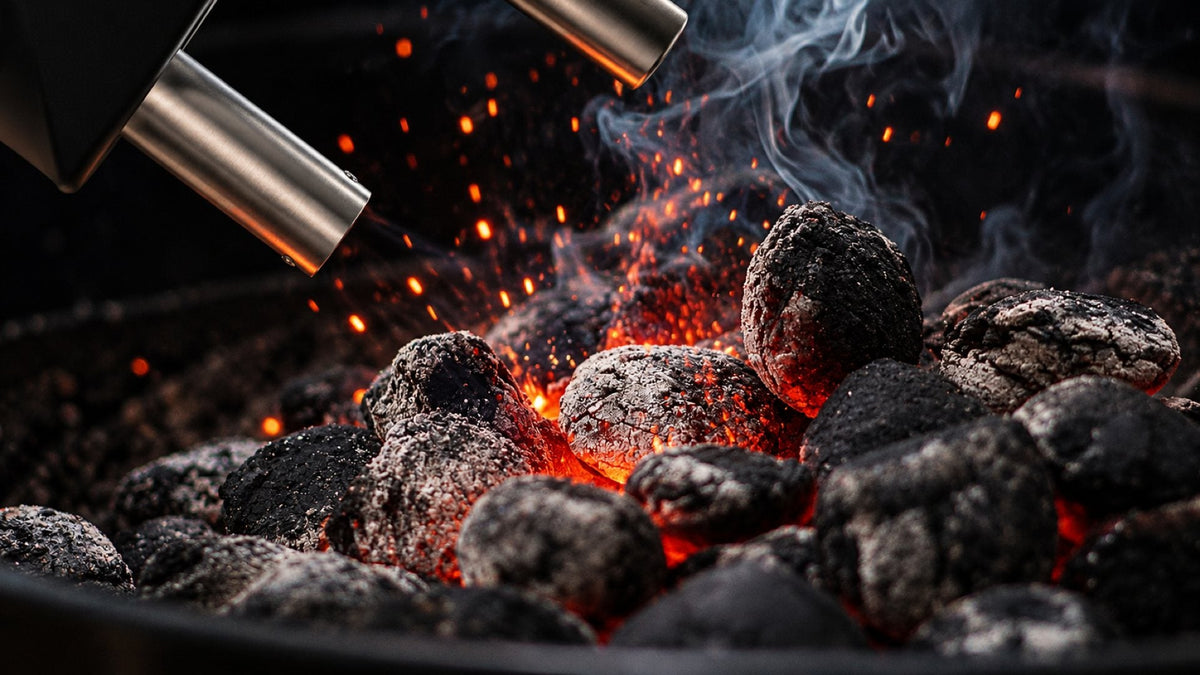
Lighter fluid gets charcoal going, but it brings a petroleum smell, a tall flare-up if it ever hits a hot coal, and one more bottle to keep in the garage. Charcoal lights fine without it. All it needs is a strong flame in the right place and a steady supply of air, and a chimney starter or a butane torch gives you both.
Two ways to skip the fluid
- Chimney starter. A metal cylinder with a grate near the bottom. Charcoal goes on top, a little tinder goes underneath, and the tall shape draws air up through the pile. It’s the most dependable way to light a full load.
- Torch, direct. A butane torch aimed at the base of a small pile lights the coals right where they sit. It’s handy when you only need a few coals, or when the chimney stayed at home.
Lump charcoal catches faster and burns hotter but shorter. Briquettes take longer to light and give a steadier, longer fire. Both work with either method.
Lighting a chimney with a torch
- Set the charcoal grate in the grill and stand the empty chimney on it.
- Put a starter underneath: two sheets of loosely crumpled newspaper, a paraffin fire-starter cube or a small handful of dry wood shavings.
- Fill the chimney with charcoal. Half full is plenty for burgers or sausages; fill it to the top for a long cook or a thick steak.
- Light the starter through the holes at the bottom, working around the chimney so it catches on more than one side.
- Leave it alone. Flames climb through the pile, and the top coals start to gray at the edges.
No paper or cubes? Hold the torch flame on the bottom layer of coals through the side holes, a few spots at a time, until those coals glow red. The chimney carries the fire up from there.
Feeding the coals with air
Fire runs on oxygen, and a slow start almost always means the coals aren’t getting enough of it. A gentle push of air helps the glow jump from coal to coal.
- Stand upwind and hold the blower well back. Start far away and move closer only if the fire needs it.
- Aim at the base of the pile or the side holes of the chimney, not the top, so the air travels up through the coals.
- Keep the air low and steady. A hard blast scatters ash and sparks and can push a live coal out of the grill.
- Keep food, plates and people out of the line of air.
Without a chimney, the same idea works on a pyramid: pile the coals up, light the bottom ones in two or three places, and feed a little air at the base until the glow spreads.
How to tell the coals are ready
Cooking over black coals or open flame gives you soot and uneven heat. Wait until:
- The top layer is mostly covered in thin gray ash, usually 15 to 20 minutes after lighting a full chimney of briquettes.
- The flames have settled into a glow, with orange showing in the gaps.
- Held about five inches above the grate, your palm wants to pull away after two to four seconds for high heat, or five to seven for medium.
Pour the coals out wearing heat-proof gloves. Banking them on one side makes a two-zone fire: a hot side for searing and a cooler side for gentle cooking. That setup is also step one of a reverse sear; see how to sear a steak with a butane torch.
Tailgates, backyards and campgrounds
- Tailgate: check the stadium or lot rules first. Many limit open flames, and some provide bins for hot coals. Never dump live coals on pavement, grass or in a trash can.
- Backyard: set the grill on a level, nonflammable surface, well away from siding, deck railings and overhanging branches.
- Campground: use the grill or fire ring provided, and check local fire restrictions and burn bans before you light anything.
When you’re done, close the lid and vents on a kettle grill and let the coals burn out. At camp, drown them with water, stir and feel until cold. Ash can stay hot well into the next day, so store it in a metal can with a lid, away from anything that burns.
Where GENX comes in at the grill
The GENX All-in-1 CampCare Tool covers both halves of this job: a refillable butane torch lighter with a wind-resistant flame to light the starter or the coals, and a 40 CFM air blower to feed them once they catch. The torch ships empty, so fill it with a standard butane refill cartridge before your first cookout. Refill outdoors, away from any flame, and let it settle before lighting. Keep the lock on when it’s stowed, never point the flame at people, pets or the case, and keep it away from children.

