Camping Near Creeks and Rivers: Where to Pitch and How to Stay Dry
Falling asleep to the sound of a creek is one of the real pleasures of camping. Moving water also brings its own problems: changing levels, colder and damper nights, and a steady rush of sound that hides everything else. A bit of planning keeps the view and the white noise without the surprises.
Pitch about 200 feet back from the water
Leave No Trace guidance is to camp about 200 feet, roughly 70 adult steps, from lakes and streams. The buffer protects fragile banks and leaves animals a clear path to water. It helps you too: cool air drains downhill at night and pools along the water, so the flat spot right beside a creek is often the coldest, dampest and buggiest place in the valley.
At a campground, use the tent pad you're given. In dispersed areas, pick an established, slightly raised site and check around it before you unpack:
- Trees and limbs overhead. Streamside trees fall more readily as banks erode around their roots. Don't pitch under dead trunks or hanging branches.
- Undercut banks. Ground that looks solid at the edge can be hollow underneath. Keep tents, chairs and kids back from the lip.
- Low spots and old channels. Gravel bars and dry side channels carry water the moment the creek rises.
- A way out. Know which direction is uphill and away from the water, in case you need to move in the dark.
Our guide to choosing a campsite and leaving no trace covers the rest of the site checklist.
Know how the water can rise
Flash floods
A flash flood can arrive under a clear sky. Heavy rain on hills or canyons upstream, sometimes many miles away, can send a surge down a creek or a dry wash with little warning. Check the forecast for the whole watershed, not just your campsite, and look for flash flood watches. Never camp in a dry wash, an arroyo or on a narrow canyon floor.
At camp, look for high-water marks: lines of driftwood, grass snagged in branches above the bank, mud stains on rocks. Leave right away if the water suddenly turns muddy, starts rising, carries sticks and leaves, or you hear a roar upstream. Climb uphill, not along the channel, and leave the gear behind.
Snowmelt rivers
Streams fed by mountain snow follow a daily rhythm. The sun melts snow through the day, and that water reaches lower camps in the afternoon and evening, so a creek that looked tame at breakfast can be higher and faster by dinner. Plan crossings for early morning, when flows are usually lowest, and pitch well above the morning waterline.
Treat every drop you drink
Clear, cold creek water can still carry bacteria, protozoa and viruses from wildlife, livestock or people upstream. Treat all of it, including the water you brush your teeth with.
- Boil: a rolling boil for 1 minute, or 3 minutes above 6,500 feet. Dependable, but it uses fuel.
- Filter: pump, squeeze and gravity filters suit groups; freezing can damage some, so keep them warm on cold nights.
- Chemical: tablets and drops are light; follow the wait time on the label, which is longer in cold water.
- UV: quick for clear water, less effective in cloudy water, and it needs power.
Silty snowmelt clogs filters fast, so let a pot of water settle first or pour it through a bandana.
Keep your gear dry
Near water, damp comes from three directions: splash and spray, condensation overnight, and the ground itself.
- Pitch the rain fly taut and open its vents. Condensation is heavier beside water, and airflow keeps the inner tent dry.
- Fold the ground sheet so no edge sticks out past the tent floor; an exposed edge catches rain and channels it underneath.
- Pack sleeping bags, spare layers and electronics in dry bags, even inside the tent.
- Keep shoes, packs and food boxes off the ground: on a log, a tarp or in the vehicle.
Keep kindling in a sealed bag too, and see our tips on starting a fire in wet weather if the woodpile is soaked. Check fire restrictions first; streamside areas often have their own rules.
Stay alert when the water is loud
A rushing creek masks other sounds: a neighbor calling, a child who has wandered off, thunder behind the ridge, an animal coming down to drink. Agree on a simple signal with your group, such as three whistle blasts, and keep young children within sight, not just earshot, near the bank.
Water corridors are travel routes for wildlife, especially at dawn and dusk. Store food and scented items the way the area requires, and never leave scraps by the water. Wash dishes at least 200 feet from the creek, strain out food bits and scatter the gray water on land; even biodegradable soap harms aquatic life when it goes straight into a stream.
Where GENX fits by the water
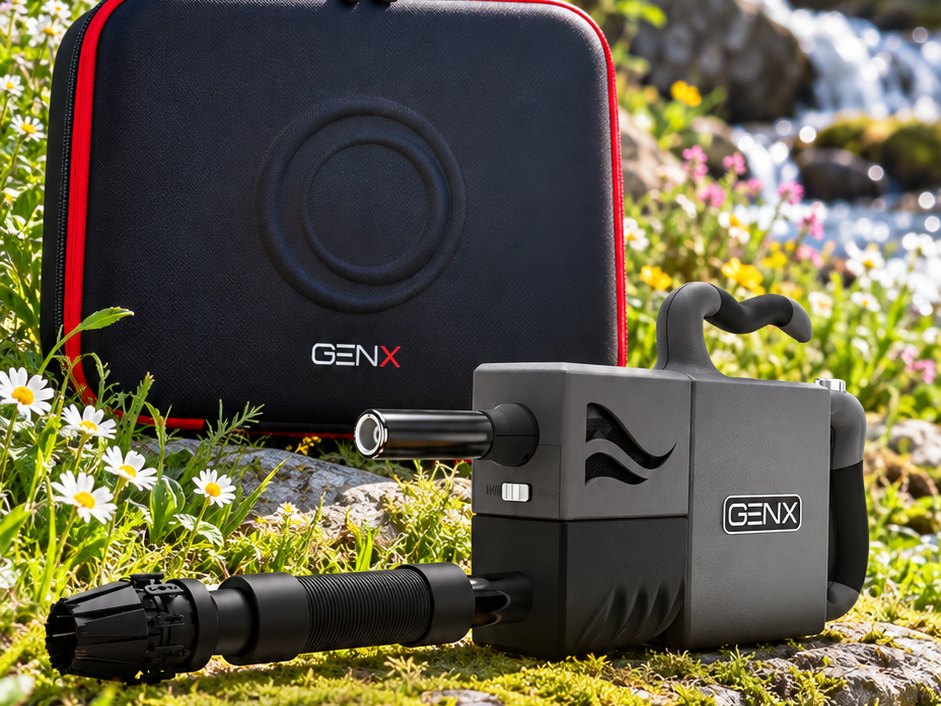
The GENX All-in-1 CampCare Tool is one unit with five jobs, and a few come in handy at a creekside camp. The refillable butane torch lighter has a wind-resistant flame for lighting a stove or fire in the breeze that funnels along a valley, and the blower feeds the coals with low, steady air once they catch. The air pipes inflate tubes, floats and sleeping pads, then pull the air back out when it's time to pack. The 33W USB-C power bank keeps a phone or headlamp topped up.
Keep it away from water and spray like any electronic gear, and stow it in its hard case with the torch lock on. Check burn bans before you light anything, and follow the float maker's pressure guidance so you don't overinflate.

