How to Choose a Campsite and Leave No Trace
A good campsite is more than the flattest patch of ground in sight. It stays dry if it rains, stays sheltered if the wind picks up, stays safe if a branch breaks, and looks the same after you leave. A few minutes of looking around before you unload can save a miserable night, and a few habits make sure the next camper finds the spot just as you did. Here's what to check, followed by the seven Leave No Trace principles in plain language.
What to check before you unpack
- Pick a durable surface. In a campground, stay on the designated pad. In the backcountry, choose an existing site or bare ground, gravel, rock or dry grass, rather than fragile plants or a fresh clearing. A site that has clearly been used before is better than one that hasn't.
- Aim for flat, not perfect. If you're unsure, lie down on the spot. A slight slope is fine as long as your head ends up uphill.
- Look up for widow-makers. Dead trees and broken limbs hung up in the canopy can fall without warning, especially in wind. Move if anything overhead looks dead, cracked or lodged.
- Read the drainage. Avoid hollows, dry washes and spots where the soil shows signs of running water. Rain pools in low ground, and a dry streambed can flood quickly in a storm.
- Think about wind and sun together. Trees, boulders or a small rise can block the worst gusts; aim the narrow end of the tent into the wind. In summer, morning shade keeps the tent from baking at sunrise. In cold weather, an east-facing spot gets early warmth.
- Keep your distance from water. Camp about 200 feet from lakes and streams where you can. It protects the shoreline and keeps you clear of rising water and the damp air that settles near it.
The seven Leave No Trace principles, in plain words
These principles come from the Leave No Trace Center for Outdoor Ethics, and they apply whether you're car camping or deep in the backcountry.
- Plan ahead and prepare. Know the rules, the weather and the fire restrictions before you go. Repack food to cut down on trash, and bring what you need so you don't end up improvising at the land's expense.
- Travel and camp on durable surfaces. Stay on trails and established sites. On a muddy trail, walk through the middle instead of around the edges, so the path doesn't widen.
- Dispose of waste properly. Pack out all trash and leftover food. Use toilets where they exist; otherwise dig a cathole 6 to 8 inches deep, at least 200 feet from water, camp and trails. Wash dishes well away from water with a small amount of biodegradable soap.
- Leave what you find. Leave rocks, plants, artifacts and antlers where they are. Don't build structures, dig trenches or carve into trees.
- Minimize campfire impacts. Use existing fire rings, keep fires small, burn only small downed wood or firewood bought locally, and put fires completely out: drown, stir and feel until cold. A camp stove is often the lighter-touch choice.
- Respect wildlife. Watch from a distance, never feed animals, and store food and trash where animals can't reach them.
- Be considerate of other visitors. Keep noise down, give others space, keep pets under control, and let the sounds of nature carry.
Leave it better than you found it
Leave No Trace is the baseline. Going one step further takes very little effort:
- Walk the whole site before you leave, eyes on the ground, looking for micro-trash: twist ties, bottle caps, bits of foil, food scraps.
- Pick up litter someone else left, with gloves if needed.
- If you camped somewhere without an established site, scatter leaves and twigs back over the tent spot so it doesn't become a new one.
- Make sure the fire is cold to the touch, and leave the ring free of trash. Foil and food scraps don't burn away.
- Report hazards such as a dangerous tree or a damaged fire ring to the campground host or a ranger.
If this is your first trip, our beginner gear list for a first camping trip helps you pack so you're not caught short.
Where GENX fits
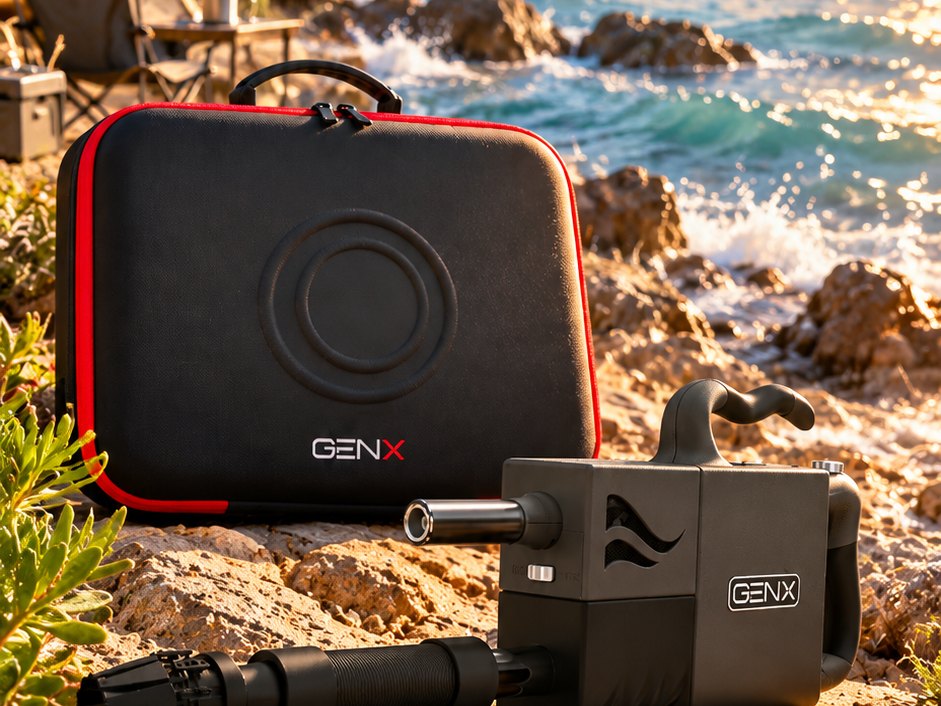
The GENX All-in-1 CampCare Tool is built for the small jobs of a tidy camp. Its refillable butane torch lighter, with a lock/unlock switch, lights a fire in an existing ring or lights your stove, and its air blower, held at a distance with steady air, feeds the coals without scattering them outside the ring. Before you pitch, the blower clears loose leaves and twigs off the tent pad, and at pack-up the vacuum nozzle picks crumbs and grit out of the tent and the car so food scraps don't get left behind.
Check fire restrictions before you light anything, never leave a fire unattended, and keep the torch locked when it's packed. It ships empty, so fill it outdoors with a standard butane refill, away from flames, and let it settle before lighting. Learn more on the GENX All-in-1 CampCare Tool page.

