How to Choose a Fire Starter That Works in Wind and Rain
Almost any fire starter works on a calm, dry evening. The real test comes when the weather turns: gusts snuff out a soft flame, rain soaks the striker, and cold fingers fumble small parts. If you camp in spring and fall, on the coast or in the mountains, choose your fire starter for the worst evening of the trip, not the easiest one. Here is how the main types behave in wind and rain, and what to look for in each.
What "windproof" really means
No flame is truly windproof. Products sold that way make a flame that resists being blown out, either by shielding it or by burning fuel as a pressurized jet. Rain is a separate question: whether the starter still works after it gets wet, and whether its fuel or battery survives a soaking. Cold is a third question, because butane and batteries both lose performance near freezing. A good choice answers all three for the places you camp.
The main types
Ferro rods
A ferrocerium rod scraped with a steel striker throws a shower of very hot sparks. There is no fuel to run out and no flame to blow out, and a rod that gets wet works again once you wipe it dry. The catch is skill and tinder: sparks only light fine, dry, fluffy material, so you need prepared tinder and some practice, especially with cold hands.
- In wind: the sparks keep coming, but gusts scatter loose tinder. Shield it with your body or a log.
- In rain: wipe and strike. The tinder is the weak link, so carry it sealed.
- Look for: a thick rod, a striker with a sharp square edge, and a cord that keeps the two together.
Windproof wick lighters
Refillable lighters with a chimney around a fluid-soaked wick hold a flame in a light breeze much better than a disposable lighter. Strong gusts still push the flame around, and the fluid slowly evaporates even when the lighter sits unused.
- Look for: a lid that closes firmly, a spare flint and wick, and the habit of topping up the fluid before each trip.
Butane torch lighters
A torch lighter forces butane through a nozzle and burns it as a focused jet. That jet holds up far better in wind than a soft flame and puts the heat exactly where you aim it, which helps a lot with damp tinder. The weak spots: butane vaporizes poorly near freezing, and every torch needs refilling sooner or later.
- Look for: a lock/unlock switch so it can't fire in your pack, a fill valve that takes standard refill cartridges, and an adjustable flame.
Electric arc lighters
Rechargeable arc lighters make a small electric arc between two points. There is no flame for the wind to blow out and no fuel to carry, but the arc is tiny, so you have to hold the tinder right against it. Keep the contacts dry, and remember that the battery needs charging and weakens in the cold.
Air-assisted starters
Some tools pair an ignition source with a fan or blower. The flame or arc lights the tinder, and a steady stream of air helps the first small flames grow into the kindling. In gusty conditions you also get to put air where you want it, instead of where the wind decides. They are heavier and need charging, so they suit car camping and cookouts more than backpacking.
Storm matches
Storm matches have a long coated head that keeps burning in wind and can relight after a brief soaking. They make a good backup: light, simple and cheap. Keep them in a sealed container with their own striker, since a damp striker is a common failure point.
What to look for, whatever the type
- Use with cold, wet hands. Try it at home with gloves on. Big switches and simple motions win.
- A safety lock. Anything that makes a flame should not be able to fire inside a pack.
- A refill or charging plan. Know which fuel or cable it needs, and pack it.
- A dry home. A dry bag, a sealed container or a hard case keeps the starter and your tinder ready to use.
- Weight that matches the trip. Backpackers count ounces; car campers can carry a heavier, more capable tool.
- A backup. Carry two different methods, such as a lighter plus a ferro rod or storm matches, so one failure doesn't end the fire.
Technique beats gear
Most failed fires in bad weather come from the setup, not the starter. Collect more fine tinder and pencil-thin kindling than you think you need, split damp sticks to reach the dry wood inside, and build a small, airy structure on a platform of sticks rather than on wet ground. Light from the upwind side, shield the first flame with your body and add fuel gradually. Our field guide to starting a fire in wet or windy weather goes step by step, and refillable torch lighters vs. disposable lighters explains why so many campers switch to a torch.
Before you light anything, check local fire restrictions and burn bans; wind is often exactly why a ban is in place. Use existing fire rings, and drown, stir and feel the ashes until they are cold before you leave.
Where GENX fits
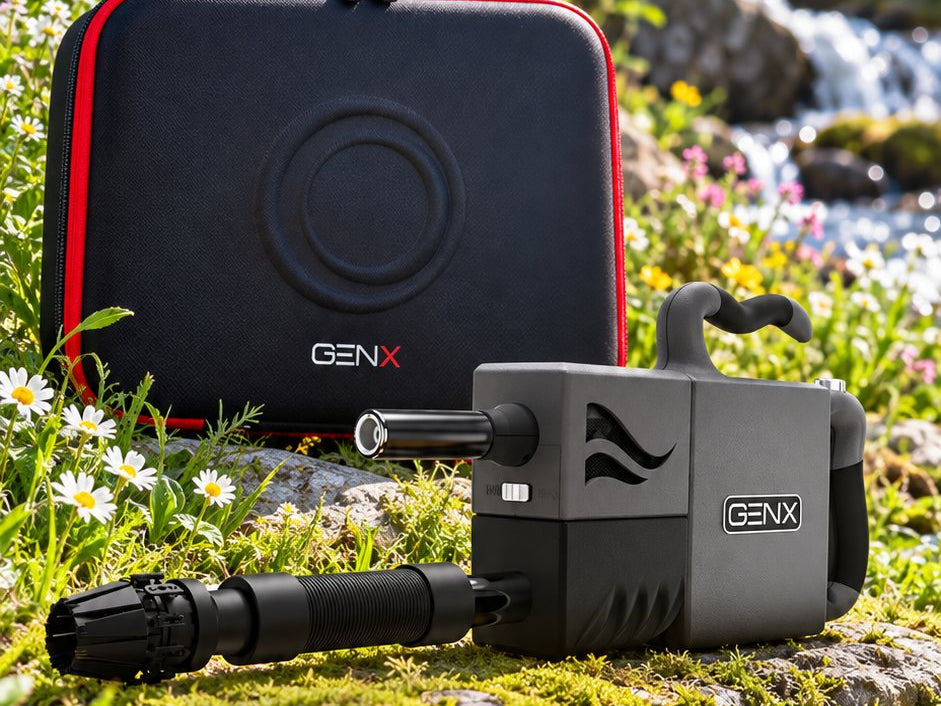
The GENX All-in-1 CampCare Tool belongs to the torch and air-assisted groups at once. Its refillable butane torch lighter has a wind-resistant flame and a lock/unlock switch, and its 40 CFM blower feeds the first flames with steady air. It is a car camping and cookout tool rather than a backpacking one, it lives in a waterproof hard case with its nozzles, and like any starter it deserves a backup, such as a ferro rod, in the kit. The torch ships empty; refill it outdoors, away from flames, and let it settle before lighting.

