Truck Camping and Overlanding: What to Keep in the Vehicle
When the vehicle is your basecamp, the kit list changes. You can carry far more than a backpacker, but you're often farther from help than a campground camper, and everything you pack has to survive washboard roads, dust and hard braking. Here's what earns a permanent spot in the truck or SUV, grouped the way you'll reach for it.
Recovery basics
Start with getting unstuck and getting home. Learn where your vehicle's recovery points are before you need them; the tie-down loops used for shipping a vehicle aren't always meant for a recovery pull.
- A full-size spare, a jack that works on soft ground (with a board to set it on) and a lug wrench that fits your wheels
- A tire plug kit, a pressure gauge and a 12 V compressor for airing back up
- Traction boards and a shovel for sand, mud and snow
- A recovery strap, rated shackles or soft shackles, and gloves; practice with them before the trip
- Jumper cables or a jump pack, basic tools, spare fuses, duct tape and zip ties
- Paper maps, a way to call for help where there's no cell signal, and a trip plan left with someone at home
On sand and rough tracks, lower tire pressure helps. Follow your tire maker's guidance and air back up before highway speeds. A small inflator for pads and floats is not a tire compressor, so keep the two jobs separate.
Water and kitchen
- Water: a common planning figure is about a gallon per person per day for drinking and simple cooking, more in heat. Carry it in sturdy jugs that won't leak if they tip.
- Kitchen box: stove, fuel, a lighter and a backup, pot, pan, kettle, utensils, a wash basin, soap, a scrub pad and trash bags. Pack out everything.
- Cold food: a cooler or fridge, with food in sealed containers so dust and meltwater stay out.
- Work surface: a folding table or tailgate setup, plus a lantern or headlamp for cooking after dark.
Keep the whole kitchen in one or two boxes so making camp is a single lift, not ten trips into the bed.
Power and light
Idling the engine at camp to charge things wastes fuel and bothers neighbors, and running accessories off the starter battery overnight is a reliable way to end up needing that jump pack. Many truck campers charge small devices while driving and switch to power banks or a portable power station once parked. Keep cables in one labeled pouch, keep a headlamp in the door pocket, and don't leave batteries or butane in a closed vehicle sitting in the sun.
Keep sand and dust out of the cab and bed
Fine dust gets into everything on a dirt road: vents, seat tracks, door seals, zippers and the corners of every bin.
- Pack in bins with lids that seal, and keep bedding and clothes in bags inside them.
- Set the ventilation to recirculate on dusty stretches, and leave a long gap behind other vehicles.
- Put a mat or a piece of outdoor carpet at the tailgate and a stiff brush by the door for boots.
- Shake out floor mats each morning and clear the bed and tie-down tracks before you load back up.
- Brush or blow grit off lenses and screens before wiping them, so it doesn't scratch.
More detail is in our posts on dusting car vents, keyboards and camera bags and keeping sand and salt out of your gear.
Secure the load so nothing shifts
Anything loose in the cab can fly forward in a hard stop, and anything loose in the bed rattles, rubs through and leaks.
- Heaviest items (water, fuel, recovery gear) low and as far forward as practical.
- Ratchet or cam straps to anchor bins to tie-down points; recheck them after the first rough stretch and at fuel stops.
- In an SUV, a cargo barrier or net between the cargo area and the passengers.
- Nothing heavy on the dash, the rear shelf or loose behind the seats.
- Fuel and butane cans upright, secured and ventilated; batteries in a box where they can't short or be crushed.
- Stay within your vehicle's and roof rack's load limits; weight up high changes how the vehicle handles.
Where GENX fits in the vehicle
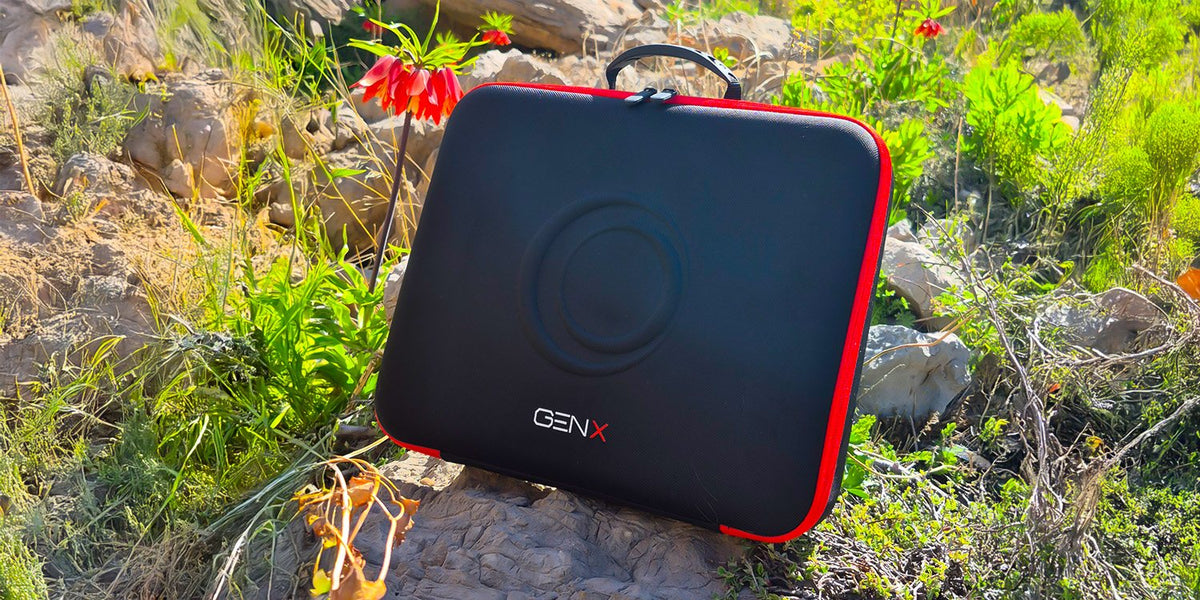
The GENX All-in-1 CampCare Tool weighs 2 lbs and travels in its own hard case, so it straps into a bin and stays put until you need it. The air blower sends a strong stream of air through vents, seat tracks and the corners of the bed, the vacuum nozzle picks up grit from mats and seats, and the torch lighter gives a wind-resistant flame for the stove or a fire ring. The air pipes inflate and deflate sleeping pads and floats (not tires), and the 33W USB-C power bank charges a phone or headlamp without touching the starter battery.
Stow it with the torch lock on and out of direct sun. Refill the torch outdoors, away from flames and people, let it settle before lighting, and check fire restrictions and burn bans before you use it.

