Fall Camping by the Lake: Cold Mornings, Early Dark and Dry Tents
Fall is when lakeside campgrounds empty out and the water lies still and glassy at sunrise. It is also when nights stretch out, mornings arrive wrapped in fog, and the tent walls drip on your sleeping bag. A few adjustments turn an autumn lake weekend from damp and chilly into the trip you'll want to repeat every October.
Why mornings by the water feel colder
On clear fall nights the ground gives up its heat fast, and low spots near a lake collect the coldest, dampest air. That's why you can wake to frost on the picnic table and fog on the water while the hillside above stays a little milder.
- Pitch a short way back from the shore and slightly uphill, rather than in the lowest flat spot by the water.
- Keep a warm hat, gloves and dry socks in your sleeping bag's stuff sack, so they're ready the moment you wake up.
- Set up breakfast the night before: water in the pot, coffee measured, stove and lighter where you can find them in the dark.
- Sleep on an insulated pad. In fall, the cold ground under you matters as much as the air around you.
Plan around the early dark
By late October the sun sets far earlier than it did in July, and lakeside camps lose light even sooner once it drops behind the trees. Work backward from sunset:
- Arrive with at least two hours of daylight to spare, so you can pick and set up a site without a headlamp.
- Gather firewood where collecting is allowed, and filter water, before dinner rather than after.
- Cook early and eat while it's still light, then settle in around the fire.
- Keep a headlamp in your pocket and a small lantern for the table. Long evenings use more light than summer ones.
Leaves on the site: pretty, slick and a fire risk
A carpet of fallen leaves looks lovely, but it hides roots, rocks and sticks that can poke through a tent floor, and wet leaves are slippery underfoot. Dry leaves near the fire ring are easy fuel for a stray ember. Before you set up, clear the tent pad and a generous ring around the fire pit down to bare ground. Our post on clearing leaves and pine needles from your campsite covers how to do it without stripping the site.
Why the inside of your tent gets wet
That dripping usually isn't a leak. It's condensation. You breathe out moisture all night, and a lake adds more humidity to the air. When the tent fabric is colder than the air inside, that moisture collects on it, the same way a cold drink sweats on a summer day. You can't stop it completely, but you can cut it down:
- Ventilate. Open the fly vents and leave a door partly unzipped, even on cold nights.
- Stake the fly taut so there's a clear gap between it and the inner tent.
- Keep wet gear out of the sleeping area; leave it in the vestibule.
- Never cook inside the tent. It adds moisture, and it is a serious fire and fumes hazard.
- Wipe down in the morning with a small towel, and dry the fly in the sun before you pack, or set the tent up at home to dry.
Keeping a campfire going, responsibly
Fall wood is often damp, and a smoky, sputtering fire wastes the fuel you brought. Buy firewood near where you camp, so you don't carry tree pests in from home. Then:
- Use the existing fire ring and keep the fire to a size you can manage.
- Start with dry tinder and pencil-thin kindling, and add larger pieces only once the kindling is burning well.
- Leave gaps between logs. Fire needs air as much as it needs wood.
- When it settles into coals, a little steady air from the side often revives it better than piling on more wood.
- Never leave it unattended. Before bed, drown it with water, stir the ashes, and feel for heat with the back of your hand until everything is cold.
Fall is also burn-ban season in some dry regions, so check local restrictions before you light anything.
Where GENX fits
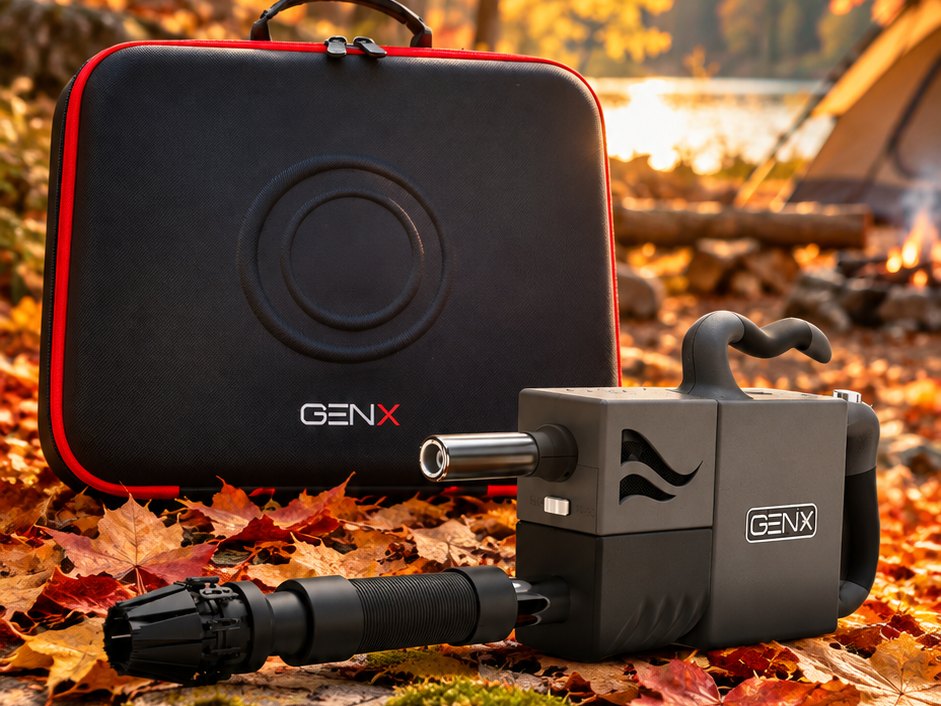
The GENX All-in-1 CampCare Tool handles several of these fall chores in one 2 lb unit. Its air blower clears leaves off a tent pad and away from the fire ring, and held well back so the air reaches the coals gently, it feeds a tired fire without scattering embers. The refillable butane torch lighter has a wind-resistant flame for lighting up in a lakeside breeze, plus a lock/unlock switch that should stay locked whenever it's stowed. The 33W USB-C power bank keeps a phone ready through those long evenings.
The torch ships empty. Fill it outdoors with a standard butane refill, away from any flame, and let it settle before lighting. Never point the flame at people, pets or the case, and keep it away from children. More details are on the GENX All-in-1 CampCare Tool page.

